
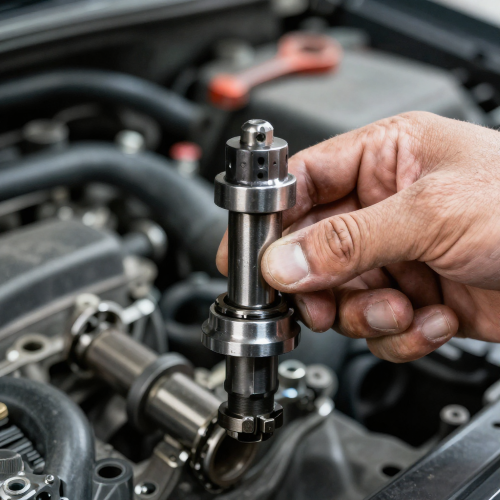
Your car idles roughly at the lights. The engine stumbles on the freeway. Then the check engine light comes on and stays on. These are classic signs that something is wrong with engine timing — and in many cases, the culprit is the camshaft position sensor.
Also known as a CMP sensor or cam sensor, this small electronic component plays a critical role in how your engine runs. It feeds real-time data to the ECU/PCM, which uses it to control ignition timing and fuel delivery. When it fails, your engine feels it immediately.
This article covers everything you need to know — what the sensor does, where it sits, what symptoms to watch for, which OBD fault codes it triggers, and what it costs to replace in Australia.
What Is a Camshaft Position Sensor?
The camshaft position sensor is a Hall Effect sensor that reads a reluctor wheel — also called a tone ring — mounted on the camshaft. As the cam rotates, the sensor generates a digital signal by detecting the teeth and gaps on that ring.
That signal tells the ECU exactly where the camshaft is in its rotation cycle. The ECU then cross-references this with data from the crankshaft position sensor to build a complete picture of engine timing.
You may also hear this component referred to as a cam sensor, cam position sensor, or CMP sensor — they all describe the same part. On engines with Variable Valve Timing (VVT), accurate CMP data is especially critical, as the ECU uses it to adjust cam timing on the fly for performance and efficiency.
What Does a Camshaft Position Sensor Do?
The camshaft position sensor function is straightforward but essential. It sends a continuous stream of position data to the ECU/PCM, which uses it to time each spark plug firing and manage the fuel injection system cycle.
Without a reliable signal, the ECU cannot confirm which cylinder is on its compression stroke. The engine may still run — but inefficiently — or it may not start at all. Timing errors of just a few degrees can cause misfires, rough idle, and increased fuel consumption.
The timing belt or timing chain keeps the camshaft and crankshaft mechanically synchronised. The camshaft sensor complements that by giving the ECU live confirmation that timing is accurate at all engine speeds.
Where Is the Camshaft Position Sensor Located?
Location varies by make and model. Most commonly, the sensor is mounted on the cylinder head, near the timing cover, or positioned behind the spark plugs. It connects to the engine wiring loom via a cam sensor harness — usually a 2- or 3-pin connector.
Engines with VVT systems or multiple camshafts can have more than one sensor. These are typically labelled camshaft position sensor A or camshaft position bank 1 in workshop documentation and OBD scan data.
If you’re not sure where yours is, check the owner’s manual or have a workshop locate it before attempting any work. On some engines it’s easily accessible; on others, it’s buried under intake components.
Symptoms of a Bad Camshaft Position Sensor
When a faulty cam sensor sends incorrect or no data to the ECU, the engine management system has to compensate — and it does so imperfectly. The symptoms of a bad cam sensor vary in severity, but they tend to worsen over time if ignored.
Here are the 8 most common bad camshaft position sensor symptoms we see at iFixAutohaus:
Check Engine Light
The ECU detects an irregular or absent signal and logs a fault code. This is usually the first visible sign. The light alone doesn’t confirm a cam sensor fault — you’ll need an OBD-II scan to pinpoint it.
Engine Misfires
Erratic cam data causes the ECU to mistime ignition in one or more cylinders. You may feel a stumble or jerk under acceleration. Left unchecked, repeated misfires can damage catalytic converters.
Rough Idling
Unstable fuel delivery at low RPM makes the engine shudder or “hunt” at idle. At a set of lights, the car may feel like it wants to stall — particularly noticeable on cold mornings.
Difficulty Starting
The ECU relies on the CMP signal to sequence ignition correctly during cranking. If the sensor is intermittent or failed, the engine may crank longer than normal — or refuse to start at all.
Engine Stalling
A sudden signal dropout while driving can cause the engine to cut out without warning. This is particularly dangerous at highway speeds or when merging in traffic.
Poor Fuel Economy
When cam data is unreliable, the ECU often defaults to a rich fuel mixture as a safety measure. This over-fuelling wastes petrol and increases running costs noticeably.
Loss of Engine Power
Sluggish acceleration and reduced throttle response are common when the ECU cannot optimise timing accurately. The car may feel flat when overtaking or climbing hills.
Increased Emissions
Inefficient combustion produces excess hydrocarbons and carbon monoxide. Your vehicle may fail a roadworthiness inspection or emit visible smoke from the exhaust.
OBD-II Fault Codes for a Faulty Cam Sensor
When the ECU detects a problem with the CMP circuit, it stores a fault code readable by any OBD-II scanner. At iFixAutohaus, we use professional diagnostic equipment to read and interpret these codes accurately before recommending any parts replacement.
| Fault Code | Description | What It Means |
|---|---|---|
| P0340 | CMP Sensor Circuit Malfunction (Bank 1) | ECU receiving no signal or an invalid signal from the cam sensor on bank 1. Most common cam sensor code. |
| P0341 | CMP Sensor Circuit Range/Performance | Signal is present but outside expected parameters. Can indicate a worn reluctor wheel, intermittent sensor, or wiring fault. |
| P000C | Camshaft Position Slow Response Bank 1 | Points to a VVT actuator or oil pressure issue affecting cam timing response. Related to intake camshaft position system performance. |
Important: These codes can also be triggered by wiring faults, a damaged cam sensor harness, corroded connectors, or a failing ECU. Never replace the sensor based on a code alone. Cross-reference using a reputable OBD-II fault code reference. Professional diagnosis is essential to confirm the root cause.
How to Test a Camshaft Position Sensor
Before condemning the sensor, a systematic check can save you an unnecessary parts purchase. Start with a visual inspection — look for oil contamination around the sensor body, damaged or chafed wiring, and corrosion on the harness connector. If deposits are visible on the sensor tip, cam shaft sensor cleaning with an appropriate electrical cleaner may restore function temporarily.
When removing the sensor for inspection, always check the camshaft sensor o ring. A cracked or flattened o ring allows oil to track back into the connector and cause intermittent faults — replacing it during reinstallation takes seconds and prevents future issues.
Basic multimeter test (workshop confirmation recommended):
- Turn ignition off and disconnect the sensor connector.
- Identify the terminals using the vehicle’s wiring diagram (supply, signal, and ground pins vary by make/model).
- Turn ignition on (engine off).
- Set multimeter to DC Volts.
- Test the supply terminal — should read approximately 5V.
- Test the signal terminal — should read approximately 5V (reference voltage).
- Test the ground pin — should read approximately 12.6V relative to battery positive.
If all three readings pass, the sensor wiring is intact. The fault may lie in the sensor itself, the reluctor wheel, or the ECU. At this point, we recommend a professional diagnosis rather than continuing to chase the fault without proper equipment.
Camshaft Sensor Replacement — Make & Model Guide
Sensor accessibility and parts availability vary significantly between vehicles. Here’s what we commonly see at iFixAutohaus across popular makes on Australian roads:
Toyota
Generally a straightforward job — accessible without major component removal on popular models like the Camry and Corolla. OEM and quality aftermarket parts are widely available in Australia, keeping costs reasonable.
Ford
Location varies between models. The Ranger and Territory are relatively accessible, while some FG/FGX Falcons require timing cover removal. Budget extra labour time on older Ford platforms.
BMW
Typically carries a higher labour cost due to tight engine bay packaging on N-series and B-series engines. The VANOS VVT system adds diagnostic complexity — correct identification of the faulty sensor is critical before any work begins.
Hyundai i10
One of the more straightforward replacements — the sensor is accessible and parts are affordable. A common job that rarely exceeds one hour of labour.
Nissan Altima
Sensor wear is common at higher mileages on QR25DE engines. We see a number of these come through the workshop with P0340 codes after the 150,000 km mark.
Renault
Faults often involve the wiring harness rather than the sensor itself. Brittle insulation on older Megane and Scenic models can cause intermittent P0341 codes that return after sensor replacement if the harness isn’t addressed.
PT Cruiser
The 2.4L engine uses both a cam angle sensor and an intake camshaft position sensor — it’s worth having both checked, as one failing often puts extra load on the other.
Regardless of make, always use OEM or equivalent quality parts. Budget components can have signal characteristics that the ECU struggles to read accurately, leading to fault codes even with a brand-new part installed.
How Much Does Camshaft Position Sensor Replacement Cost in Australia?
Total (Parts + Labour)
Parts Only
Typical Labour Time
European and luxury vehicles — particularly BMW and Audi — sit at the higher end of that range. Japanese makes like Toyota and Honda tend to be more affordable. If diagnostic time is required to confirm the fault before replacement, that is typically billed separately.
Early replacement is always the smarter financial decision. A cam sensor job that costs $300 today is far better than the engine repair bill that follows from months of timing errors going unaddressed.
Can You Drive With a Faulty Camshaft Sensor?
Technically, yes — some vehicles will continue to run on a degraded CMP signal. But it is strongly not recommended.
The risk of stalling in moving traffic is real. Incorrect timing puts progressive stress on the engine and VVT system. In some states, a check engine light on its own can flag your vehicle for a roadworthy re-inspection.
If you’re noticing any of the symptoms listed above — book an inspection immediately. The longer you wait, the more expensive the eventual fix.
Get Your CMP Sensor Diagnosed at iFixAutohaus
Our technicians diagnose and replace camshaft sensors across all makes and models every week. We use professional OBD-II diagnostic scanning equipment to confirm the exact fault — not just the code — before recommending any repair.
Whether your car is showing a check engine light, running rough, or struggling to start, we can pinpoint the issue quickly and give you an honest repair estimate with no pressure.
